The G-255 Trading Universe and Systematic Trading Model Explained
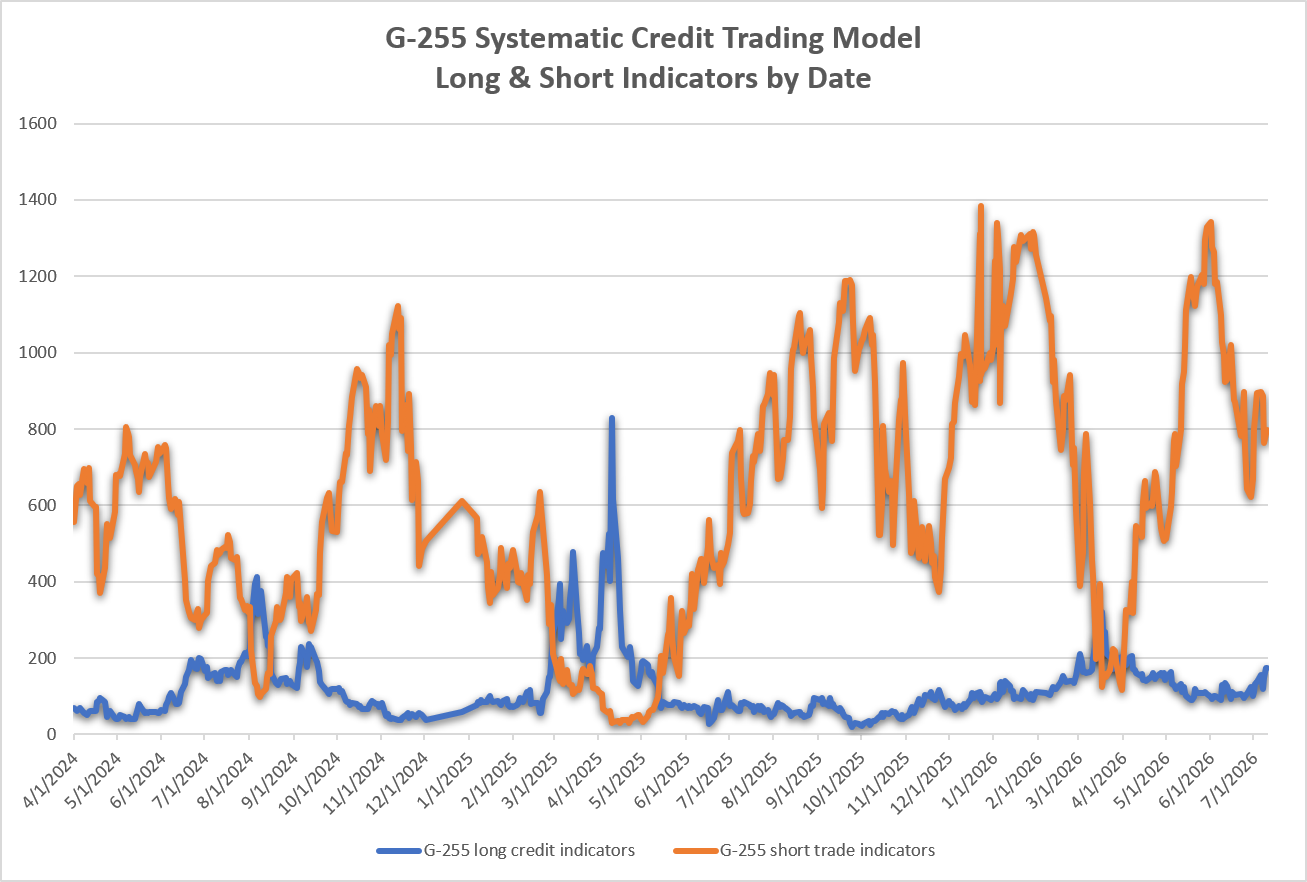
G-255 is a fully automated, quantitative model that generates long and short signals for stocks and bonds of the world's largest issuers. The trading model uses only each company's own historical data—pricing, balance sheet, cash flow, returns to shareholders, and leverage—for objective, probability-based assessments with zero human input. Back-tested over 35 years, it delivers high tracking accuracy by focusing purely on issuer-specific facts, avoiding peers, macro, or sentiment. There is no relative valuation in the Equity or Credit trade indicators.
How the G-255 Model Works
At its core, G-255 is a stochastic credit and equity trading model that recalibrates indicators daily based on publicly available data. Here's the key methodology:
· Data Inputs: For each issuer, the model analyzes 52-week public pricing history, earnings data, balance sheet leverage, debt ratios, spread-to-curve positioning, and equity metrics like year-over-year (YoY) operating cash flow growth, shareholder returns, volatility, and momentum.
· Valuation Assessment: It evaluates securities relative to their own historical trading patterns (e.g., 200-day moving averages) to determine if they are undervalued (e.g., trading more than 7.5% below historical averages for equities) or overvalued (e.g., within 10% of 52-week tight credit spreads).
· Indicator Generation: Signals are isolated to individual issuers, ignoring external factors. For credit, it focuses on de-leveraging (improving balance sheets) versus re-leveraging (increasing debt). For equity, it targets positive/negative YoY cash flow and shareholder returns.
· Cross-Asset Integration: The model links bond credit spreads with equity performance, generating indicators when divergences occur (e.g., strong equity cash flows but widening credit spreads signal potential longs).
· New Supply Handling: Automatically creates long indicators for new USD bond issuances by G-255 issuers (representing ~67% of annual USD corporate debt raised, or $1.12 trillion in 2025). Historically, 97% of these bonds reach "avoid-trading" levels after a long indicator.
· Risk Management: Targets ±5 basis points of spread movement with minimal trading days and low volatility risk. It incorporates liquidity thresholds to ensure signals are actionable on electronic platforms.
The model does not function as a traditional "index" like the S&P 500 but rather as a dynamic set of indicators and a virtual portfolio framework. It produces a systematic long/short basket trade, monitoring over 6,250 debt and equity securities daily.
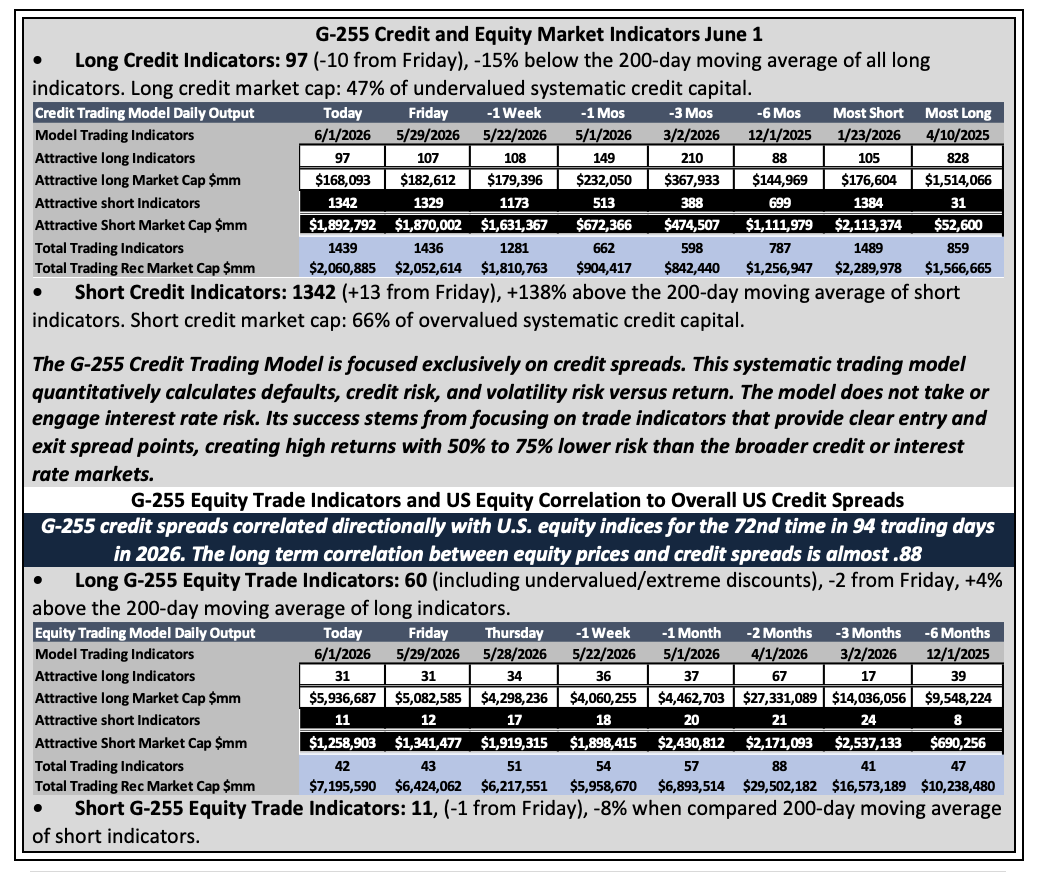
The 255 issuers have roughly $13.4 trillion of liquid market capital, and roughly $11 trillion is "tradable." However, of greater importance, the G-255 represent almost 70% of daily trading volume on all 3 markets (USD, EUR, GBP).
The G-255 represents a minimum of 66% of all the trading and market capital in all 3 corporate debt markets. And to simplify, 176 of the 255 issuers sell debt in at least 2 of the three corporate bond capital markets.
Q:Does the systematic trading model cover all three markets?
A: Oh yes, and it is why almost all systematic credit is run from London. As that is the only trading venue that actively allows trading in all three currencies simultaneously.
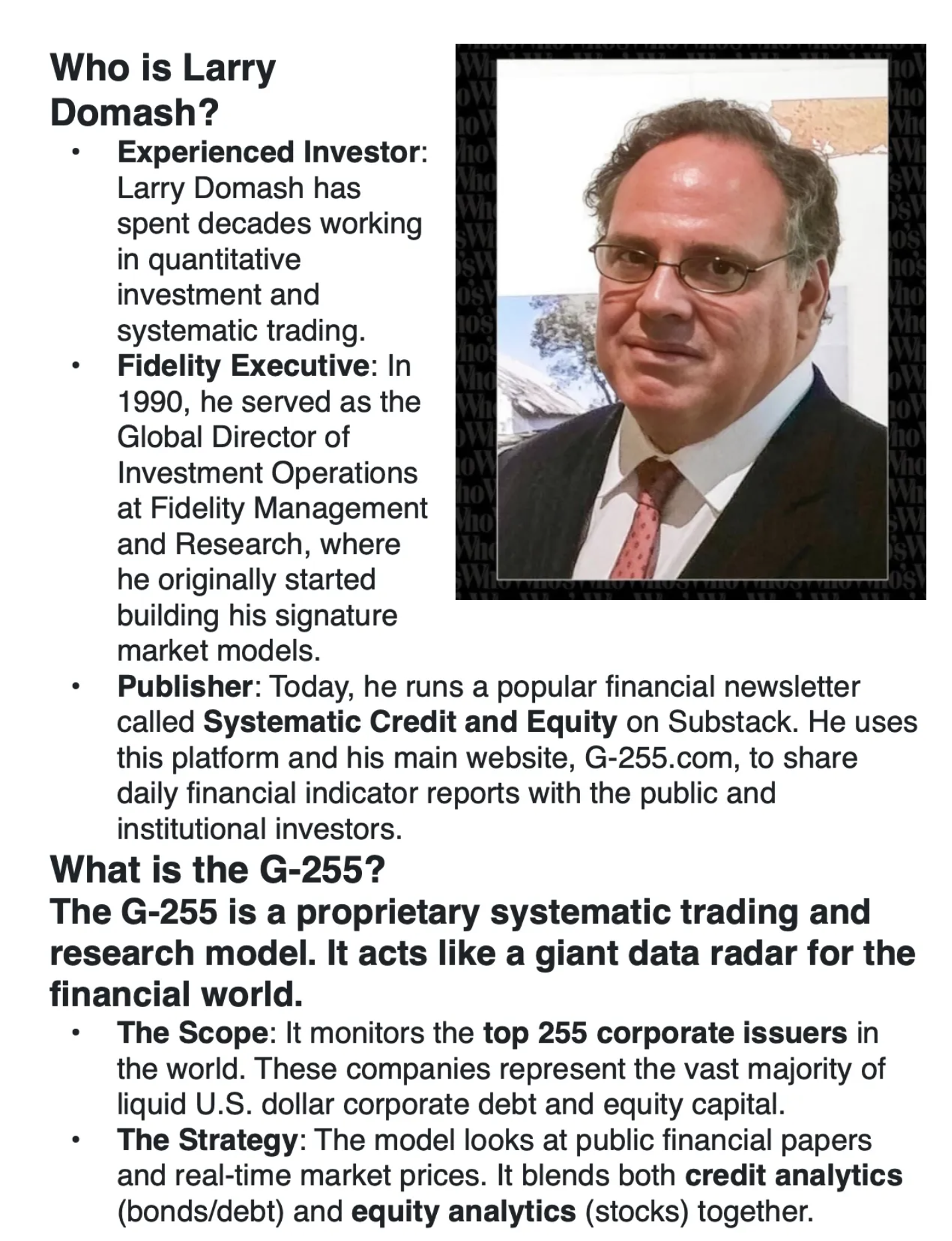
Larry Domash Creator of the G-255. This is what Google tells us about him. Who he is, what he's created, and how it all works.
Disclaimer - This report is not intended as, and does not constitute an offer, or a solicitation to buy or sell any securities or financial instruments. All data, levels, opinions, and representations herein are provided for informational purposes only and should not be relied upon for making investment decisions. Past performance is not indicative of future results. The authors of this report assume no liability for losses or damages arising from the use of this information. Investors should consult with a qualified financial advisor before making any investment decisions. The information in this report is based on sources believed to be reliable, but no guarantee is made as to its accuracy, completeness, or timeliness.